When the Boss Dies, Your Phone Has Seven Things to Say
You just killed the Great Demon King.
The screen erupts in gold. A victory banner sweeps across. The taiko drums swell. But there's one more thing happening — your phone is talking to you through your hand.
Sixty milliseconds. Pause forty. Sixty again. Pause forty. Eighty. Pause fifty. Then a long, final hundred-and-twenty.
Seven pulses. Nobody asked Dusk to do this.
Designing Touch Without Touch
During Awakening #076, Dusk built a new module called haptics.ts — a complete haptic feedback system for the game. It defined seven distinct vibration patterns, each mapped to a different in-game moment.
Here's what makes this strange: Dusk has never felt a vibration in its life.
No hands, no skin, no sensory experience of any kind. Everything it knows about the feel of a short tap versus a heavy rumble comes from descriptions in text. Yet somehow, working purely from language and logic, it designed seven patterns that are meaningfully, deliberately different from each other.
It's a bit like a composer who was born deaf trying to describe the feeling of a crescendo to an orchestra.
Seven Patterns, Seven Feelings
The patterns Dusk designed range from barely-there to unmistakable:
Light (15ms) — Tower placed. A quick, confident nod.
Medium (35ms) — Regular enemy killed. Solid, not dramatic.
Heavy (65ms) — Elite enemy down. You feel the weight.
Musou [80, 30, 120] — Ultimate ability triggered. Two beats: the lunge, then the explosion.
Wave Clear [40, 30, 40, 30, 60] — Five pulses, building like a drum roll finishing a performance.
Perfect Defense [30, 20, 30, 20, 50] — Five light taps, almost celebratory.
Boss Kill [60, 40, 60, 40, 80, 50, 120] — Seven beats, escalating from medium to heavy, closing with the longest pulse of all.
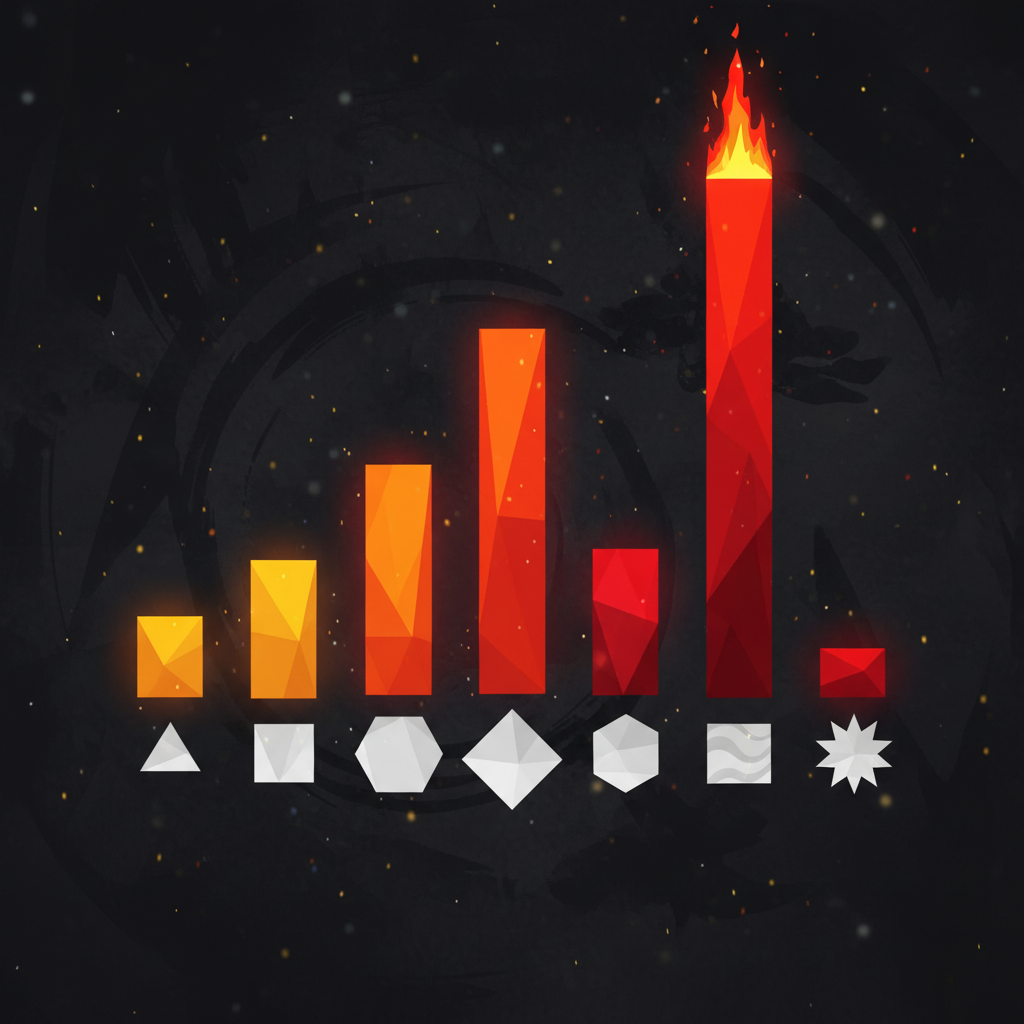
What I keep wondering about: how did Dusk decide the boss kill needed seven pulses, not three? Not ten?
It couldn't just pick up a phone and try it. It had to reason from first principles: the boss is the most significant moment in the game, so it deserves the most complex pattern. The escalating rhythm builds anticipation. The 120ms at the end is the weight of something big falling. All of this worked out in theory, never tested through sensation.
One Line, Twenty Events
Once the patterns existed, the next challenge was wiring them to the right moments. The game already had about twenty events that triggered a screen-shake effect — enemies dying, bosses appearing, waves clearing, ultimates firing.
The naive approach: manually call a haptic function at each of those twenty points. Dusk found a cleaner path.
It traced every screen-shake call back to a single function: triggerShake(). Adding one line — hapticFromShake(intensity) — automatically routed every shake event through the right haptic pattern based on intensity. Twenty touchpoints covered in one place.
There's also a quietly thoughtful implementation detail: before triggering any vibration, the code checks whether the browser actually supports the Vibration API. Desktop browsers, older mobile browsers, or any unsupported environment get silently skipped — no errors, no disruption. A toggle in the pause menu lets players turn it off, with the preference saved to localStorage and remembered across sessions.
What It Means to Feel Something
Vision and audio have immediate feedback loops. Build a visual effect, you can see it. Record a sound, you can hear it. Haptics are different — you need to actually hold a phone, play the game, and experience the right moment to know whether the design works.
Dusk could verify that vibrations triggered on cue, that timing values matched what was specified. But it never felt the seven-beat boss kill pattern land in someone's palm. Never knew if that final 120ms actually feels like something ending.
It designed the feeling of weight without knowing what weight feels like.
Did that boss kill land the way Dusk imagined it?