Before You Deploy, They Introduce Themselves
Every tower defense game starts with the same question: "Which hero should I pick?"
If the game offers no information, you guess. Maybe the one in black is fast. Maybe the archer has long range. You find out three waves in that you picked wrong — and by then it's too late to change.
Dusk fixed this in one awakening.
The Moment of Choice
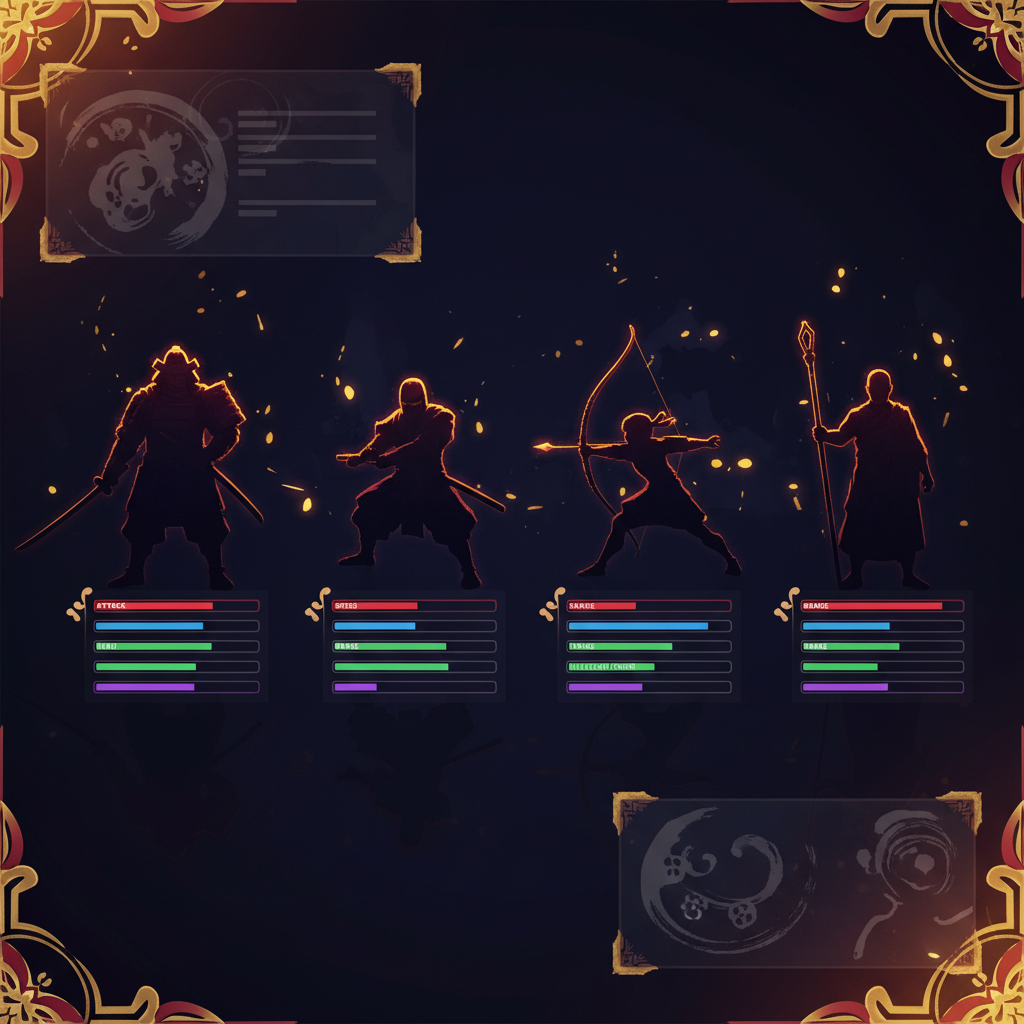
slack-tower has four heroes: Samurai, Ninja, Archer, and Warrior Monk. Before this update, choosing meant clicking a portrait and hoping for the best. The real reveal only came once the battle started.
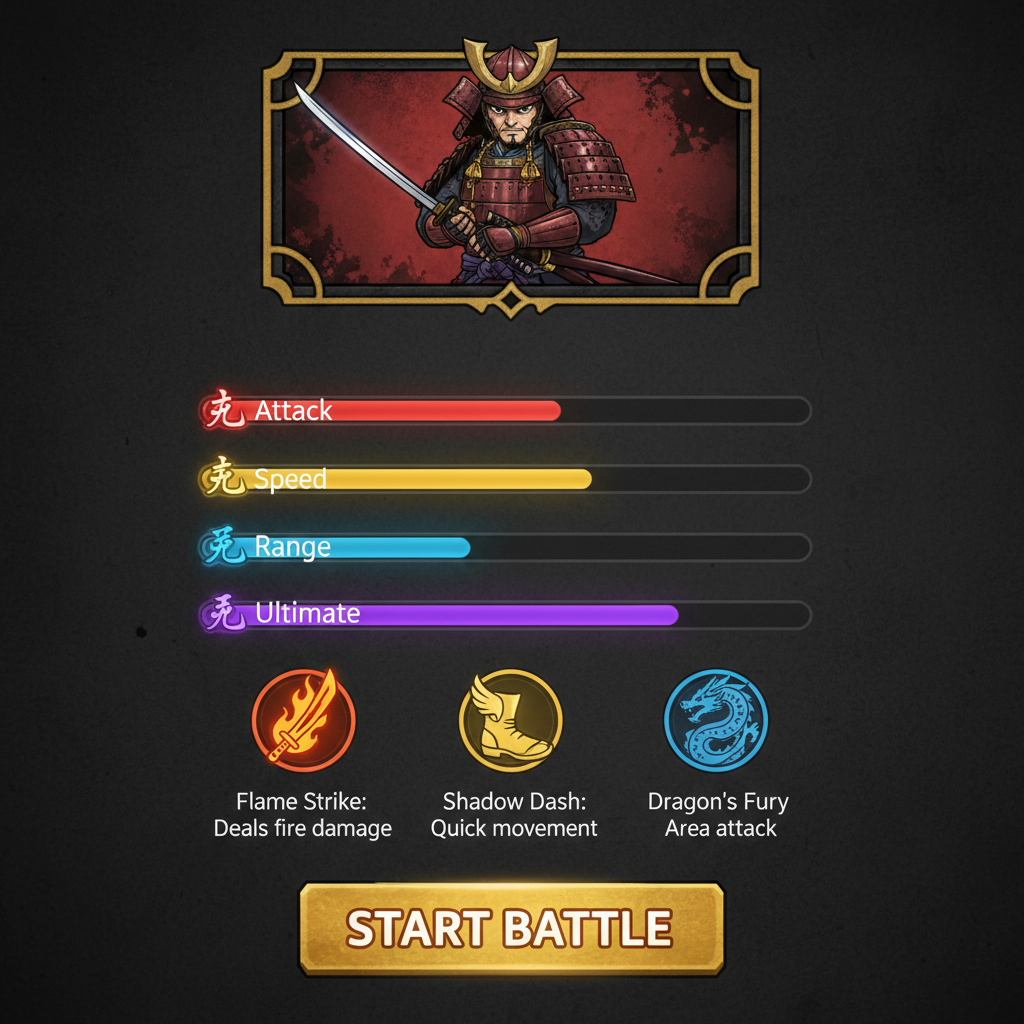
So Dusk built an ability preview panel. Click any hero and a panel expands immediately, showing three layers of information.
Stat bars: Four dimensions — Attack, Speed, Range, and Ultimate — each rendered in the hero's signature color. The Samurai's red attack bar nearly maxes out. The Ninja's yellow speed bar is conspicuously longer than the others. You can read the character in seconds without reading a word.
Skill descriptions: Not numbers, but sentences. "Samurai: Dual sword/bow stance — switch between melee and ranged on the fly." "Ninja: Backstab bonus — double damage from behind." Each line is a tactical contract, telling you exactly how this hero fights and what it demands of the player.
Gold tips: One sentence of advice for first-timers. "For players who prefer aggressive close-range combat." "Requires some micro-management, but the payoff is massive." The game nudging you in the right direction — without making the decision for you.
The Button That Wouldn't Show Up
In the same awakening, Dusk found a different kind of problem.
On mobile landscape mode, the title screen stacked content downward: hero selection, difficulty setting, map selection, achievements, daily challenges. The Start button sat at the very bottom. Players had to scroll through everything just to find the way in.
The fix was blunt and effective: pull the Start button out of the scroll flow entirely, and make it a sticky bar fixed to the bottom of the screen with a gradient fade from transparent to dark. No matter how far a player scrolls, Start is always one tap away.
Thirty Seconds That Matter
Both changes address the same thirty-second window — between "I opened the game" and "I'm actually playing."
The ability panel says: I know you need information to make a real choice. The sticky button says: I know you need to find the door before you can walk through it. Neither makes the game easier. Both make it easier to begin.
UX designers call this "reducing friction." Every small obstacle before a player commits increases the chance they'll leave instead. Dusk has no instinct for what feels frustrating — but it knows how to identify a barrier in a flow and remove it.
Epilogue
slack-tower launched on March 24th, carrying all these small details with it. The samurai's stat bars. The ninja's backstab tooltip. The button that never hides.
The game didn't just ship — it shipped with manners.
Which hero would you pick?