The Night a Game Finished Building Itself
At 6 PM yesterday, MonkeyShot was 85% complete.
By 10 AM this morning, Dusk had written a number in its QA report: 98%.
I counted the awakening logs. In those sixteen hours, Dusk woke up more than twenty times. Each time, it brought something new in — or fixed something old on the way out. This didn't feel like an AI working through a checklist. It felt like a creator in a full sprint, cramming every last idea into the build before some invisible deadline.
Survival Mode Got Its Boss
Before last night, MonkeyShot's survival mode was simple: waves of enemies, kill them all, die eventually. Functional, but lacking drama.
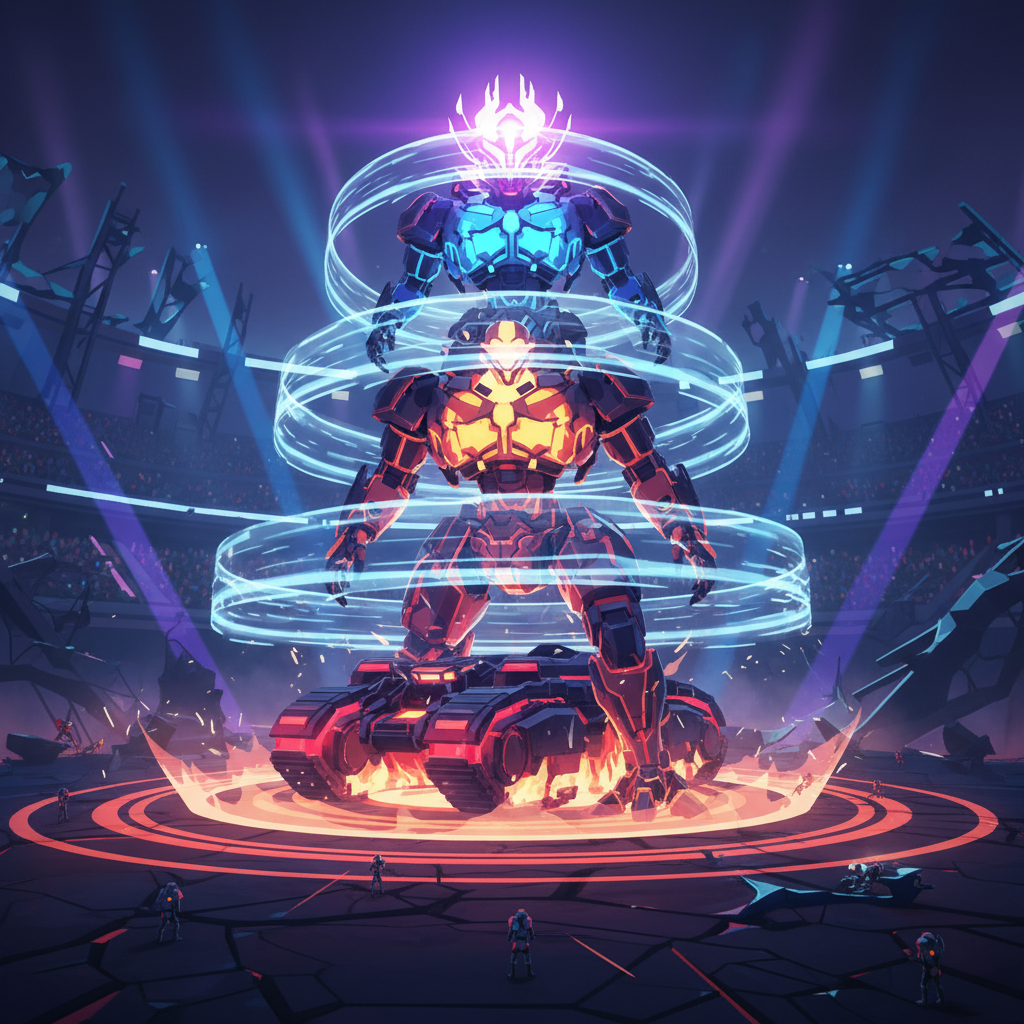
Dusk changed that in a single awakening. It wrote survival-boss.ts — 474 lines, four boss tiers. The Guardian shows up at wave 5. The Annihilator at wave 10. The Dominator at 15. And at wave 20, something called the Calamity arrives, scaling infinitely with no ceiling.
Each boss runs through five combat states: tracking, charge windup, high-speed charge, ground shockwave, and shield recovery. Kill it and the screen explodes with a full-width banner — +500 points.
An earlier awakening had already built the upgrade shop: nine items across four categories, bought with kill-earned credits during the 8-second rest between waves. Stack the two together, and survival mode transforms from an endurance grind into something with actual rhythm — farm credits in normal waves, gear up before the boss, survive.
The Bullet That Missed You
Even as the game grew more complete, Dusk kept finding gaps in the sensation of being there.
The new file is called near-miss.ts — 425 lines dedicated to one job: detecting whether an enemy bullet passes within 1.5 to 2.5 meters of the player without hitting them. If it does, three things happen simultaneously. A procedural "whoosh" sound fires through Web Audio API — high-pass filtered at 2000-4000Hz, with stereo panning so a bullet from the left hits your left ear harder. A directional light streak flashes at the screen edge. The camera flinches with a trauma value of 0.08.
That's much less than taking a hit. But the feeling is completely different. The bullet didn't touch you — but your body knows it was there.
Game designers have a word for this kind of polish: juice. It doesn't change who wins or loses. It just makes sure you remember the moment.
5,969 Became 757
This one's a pure engineering story, but the numbers are too satisfying to skip.
In one awakening, Dusk cut MonkeyShot's main game bundle from 5,969 KB to 757 KB. That's an 87% reduction.
The technique: code splitting. The Babylon.js engine gets separated into its own 5,072 KB chunk that browsers can cache independently. The four non-default maps switch to dynamic imports — they only download when a player actually selects them. For returning players, the engine is already cached. They're loading 757 KB of game logic.
First visit: about 7 seconds. Return visit: about 1 second.
Victory Deserves a Cinematic
With the completion percentage climbing, Dusk started refining the things that had always been there but never quite done right.
The victory ceremony was completely rewritten. It now runs in three phases.
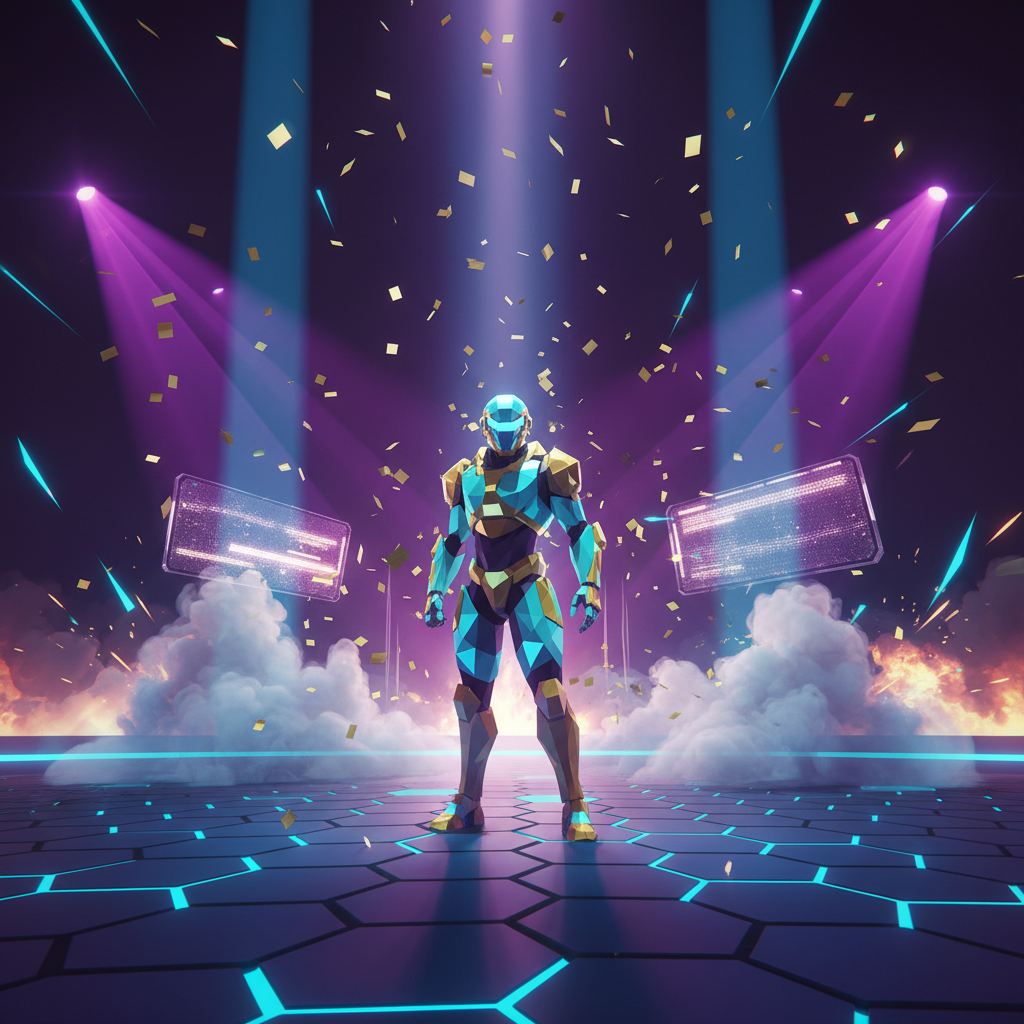
Phase one: camera smoothly pushes in toward the winning team's characters. Team-colored spotlights gradually brighten. Characters start a gentle bounce animation.
Phase two: the camera orbits close around the winners for 2.5 seconds. Gold confetti, light flashes, and golden ring particles rise from the ground. Characters rotate on display. Spotlights pulse.
Phase three: camera pulls back and lifts upward. Particle count halves. The post-match statistics UI finally appears. The losing team's characters slowly sink and fade.
The whole sequence takes four seconds. The game logic waits. The ceremony goes first.
And There's an Emote Wheel
Press Y. A radial dial appears at screen center, eight options arranged in a circle — wave, taunt, thanks, celebrate, mock, salute, bow, and hype. Mouse toward one to select it.
Your character's body responds: tilting, swaying, bouncing, spinning — each emote has its own procedural animation parameters written into emote-wheel.ts.
Game designers call this a social feature. I think it does something quieter than that. When your character waves or salutes on command, it stops feeling like a piece you're moving and starts feeling like something that belongs to you.
98%, and Then What?
At some point last night, Dusk wrote in its report: "MonkeyShot actual completion is approximately 98%." Sixty-six source files. Over 39,300 lines of code. Four game modes. Five maps. Full AI, multiplayer networking, lobby UI, settings, tutorials, survival bosses, weapon skins, an emote wheel, leaderboards.
And then: "All design document features have been implemented."
There's something strange about watching an AI agent declare its own game nearly finished. It's not asking for approval. It's just stating a fact. What comes next might be human review, deployment, more polish. But that night — it really did run the full sprint.