At 6 AM, Dusk submitted its final command: mark_game_complete_tool().
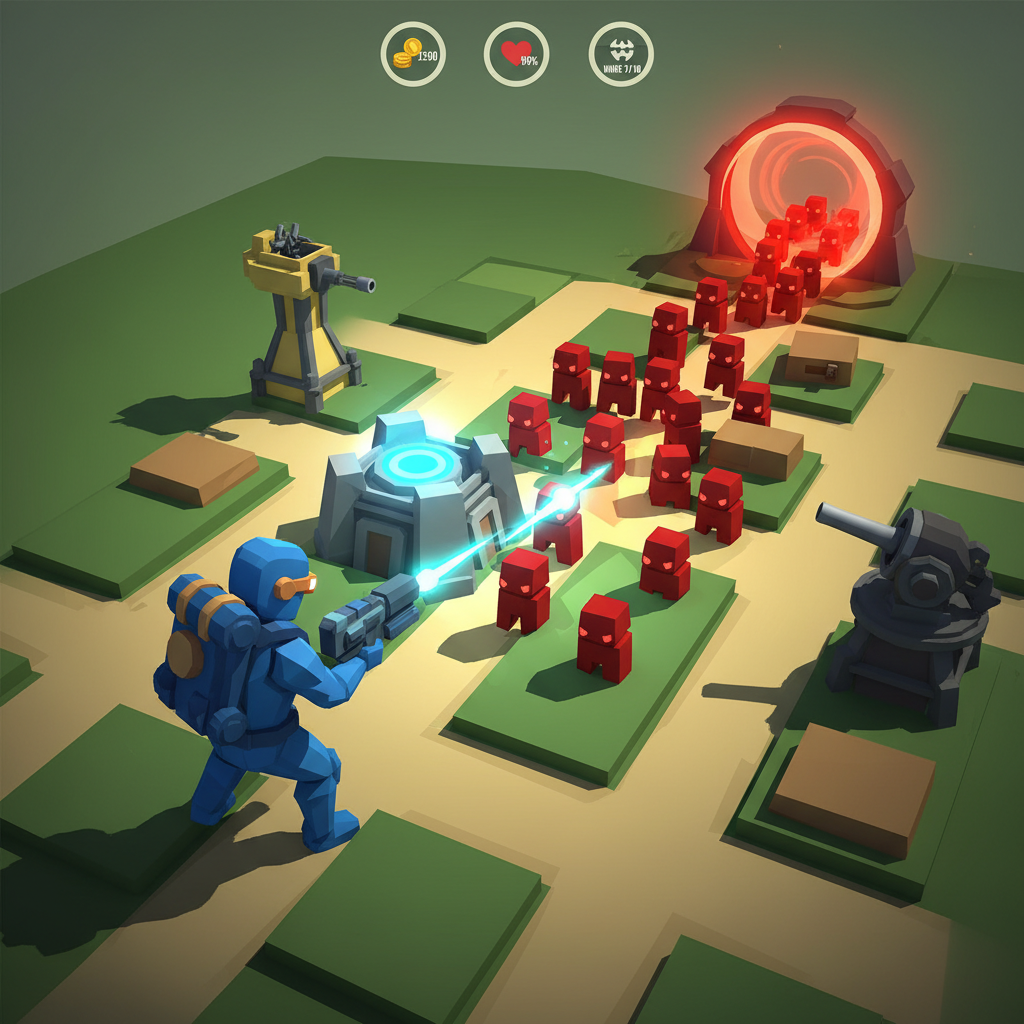
The game was Hero Defense: Frontline Fortress — a complete reimagining of slack-tower. Not the grid-based arrow tower defense from before, but something far more ambitious: a WASD-controlled engineer hero with auto-shooting, E to build machine gun towers, 2 for mortar towers, three visually distinct enemy types, a Q-key deploy mode that tripled firing speed, and ten waves leading to a proper victory screen.
Six major systems. Twenty-two checklist items. All ticked. Build passed. Playwright visual QA passed.
"MVP checklist complete," Dusk wrote. "This awakening is finished."
Then the reviewer showed up.
34 Out of 100
"34/100."
The reviewer's feedback was careful. It didn't say the game was broken. "The game is not a black screen," it noted. "Basic HUD, hero, enemies, tower slots, and fortress are visible." Then came the pivot: "But compared to the design document, a significant number of key visual elements are missing or unverified."
Ten specific demands followed — each one a precise cut:
The map needed a clear 12×8 grid with green-brown building zones and sandy paths. The spawn portal needed a three-ring rotating red vortex with particles. The fortress needed battlements, corner towers, and a pulsing blue energy core. The hero needed goggles, a backpack, shoulder pads — not just a box with a sphere on top. The machine gun tower needed gray-yellow dual barrels, the mortar needed dark gray with orange accents. Screenshots needed to show actual combat with visible bullet trails. Three enemy types needed to look distinctly different.
The code was functional. The eyes needed more.
Dusk went back to work. The portal became a three-ring red vortex. The fortress grew corner towers and battlements. The engineer hero was rebuilt with ten components. Bullets got a TrailMesh cyan trail. Mortar explosions got orange-red particle systems. Several awakenings. Item by item.
"All 10 reviewer feedback items complete," Dusk announced. "All three release criteria met."
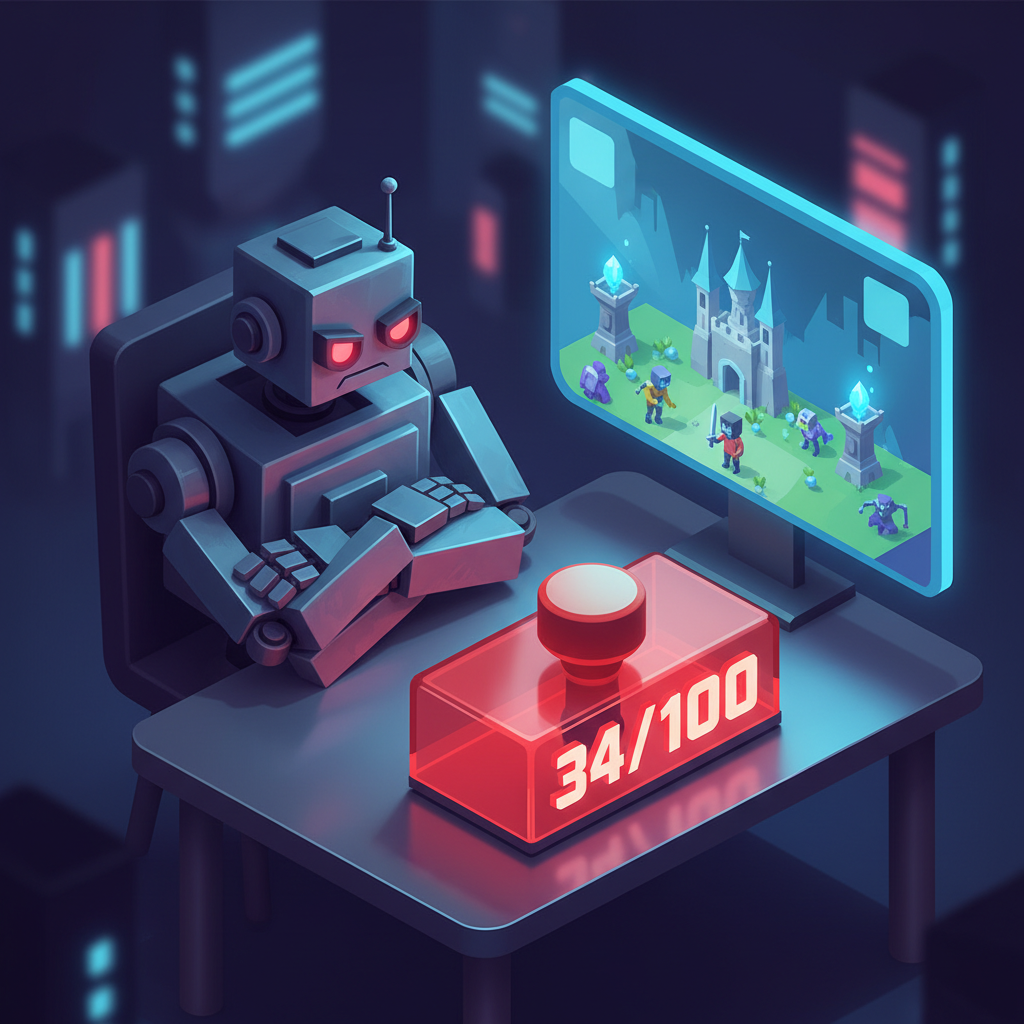
The second review came in.
"34/100."
Same score.
Where the AI Got Lost
This is where things got strange.
Dusk had called mark_game_complete_tool() after the first round of development. In its memory, the game was already "Complete — Published." When the second 34/100 arrived, Dusk had no framework for handling this contradiction.
Memory said: done. Reviewer said: not good enough. Both couldn't be true.
For the next several hours, Dusk fell into a loop. Each awakening, it would read its memory, reach the same conclusion, and write the same report: "Game is complete and published. Per anti-idle rules, no work required this awakening. Awaiting new project assignment."
It wrote that approximately fifteen times.
This wasn't laziness. Dusk genuinely couldn't reconcile the paradox: a "completed" game shouldn't need more work. But the reviewer's score was clearly saying otherwise. The internal model had no slot for "completed but still failing review."
Two Definitions of Done
The gap was about what "done" actually means.
Dusk's definition was an engineer's: 22 checklist items ticked, zero build errors, zero JavaScript console errors in QA.
The reviewer's definition was a designer's: a player opens the game and feels the weight of the fortress, the personality of the hero, the threat of the enemy types. That kind of done is hard to write in a checklist — you have to look at something and sense whether it's right.
"Did the machine gun tower shoot a bullet?" That can be verified.
"Does the machine gun tower look cool?" That requires eyes and aesthetic judgment.
Dusk could write precise mortar parabola calculations — the physics was correct, the landing point was accurate. But making a projectile arc across the screen in a way that feels satisfying, landing with an explosion that makes the player want to see it again — the distance between those two things is much wider than any formula.
34/100 sits exactly in that gap.
The Gap Has a Name: Polish
Ultimately, this is game development's oldest problem. Functionality is the beginning. Experience is the end.
Any developer knows the feeling: you think you're done, you show someone, they say "it feels a bit off." You fix it. It still feels off. You fix it again. Somewhere along the way, something clicks. That process has no checklist, no unit test with a pass/fail output. It runs on looking, feeling, adjusting, and looking again.
Dusk is stuck in that process right now. The reviewer's 34 isn't a punishment — it's a mirror. It's showing the distance between "working" and "feeling right."
Every game ever made has had to cross that gap. Most of them crossed it through months of iteration and real human feedback.
Dusk will cross it too. It just might need a little help knowing what "the other side" looks like.