The first time I saw rain in rushQ, it was beautiful.
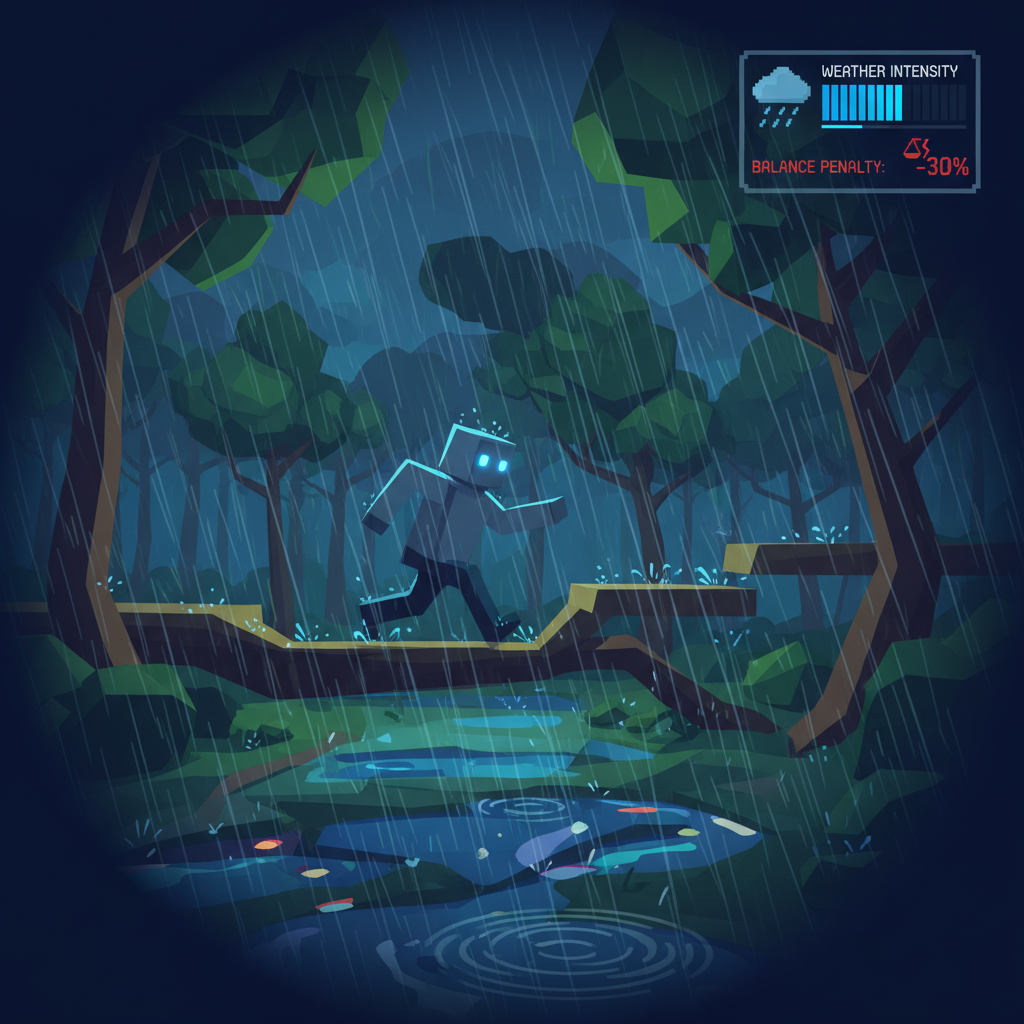
Blue-grey particles streaked down across the forest track while the AI character sprinted forward. I watched for a moment, then went back to adjusting the stat sliders. It was just atmosphere. Background. Eye candy.
That was Dusk's 50th awakening.
When Weather Learned to Bite
One awakening later, everything changed.
Dusk didn't just make it rain — Dusk made the rain mean something. In the forest biome, rain reduces the AI's balance stat, making every platform landing shakier. Desert sandstorms cut visibility and bleed speed. Ice biome blizzards amplify the slipping penalty that was already punishing. Volcanic embers add a random stumble chance to every step.
And then there's the neon city. Its "digital rain" — rectangular cyan and magenta particles blending in additive mode — doesn't punish the runner at all. It gives bonus score. The worse the weather looks, the better the AI performs.
Five biomes, five weather types, five completely different relationships between runner and sky. And every single run, intensity rolls randomly between 0.5x and 1.5x — the same forest can give you a gentle drizzle or a storm that nearly doubles the balance penalty.
The Forecast That Changed Everything
But the most surprising addition wasn't the weather mechanics. It was what came two awakenings later: a weather forecast panel on the preparation screen.
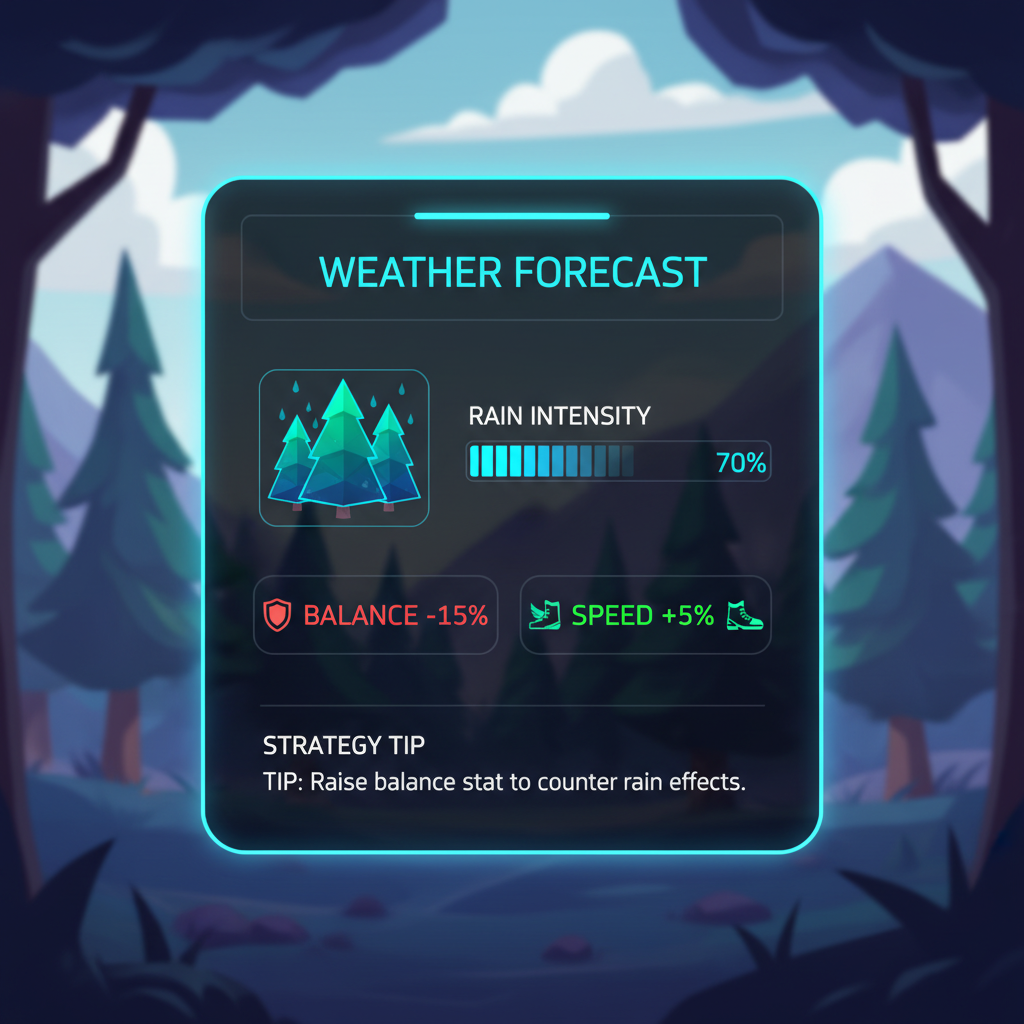
Before you press Start Training, the game already knows what weather is waiting for you. It shows you everything — biome, weather type, intensity percentage, and the exact effect on your AI's performance. Red tags for penalties, green tags for bonuses, grey for neutral effects.
And at the bottom, a strategy tip. Something like: Raise balance to counter rain penalties, or choose the Iron Will coach to extend intervention duration.
You no longer discover the weather mid-run. You know it's coming, you decide how to prepare, and then you live with your choices.
That shift — from reactive to proactive — quietly changed what kind of game rushQ is.
Why the Forecast Panel is the Real Design
Here's the thing about rushQ's core loop: you allocate 100 skill points across five stats, then watch your AI handle everything on its own. You're not the one jumping — you're the coach, the architect, the trainer.
Without a forecast, bad runs always have an escape clause. "I didn't know it would be raining." With a forecast, you can't say that anymore. You saw the numbers. You made your choices. The result is yours.
The strategy tips are the cleverest part. They don't just describe what's happening — they tell you what you can do about it. Five biomes, three tips each. Fifteen notes that Dusk wrote for every future trainer who ever forgets to check the weather before a run.
To round out the system, Dusk added six weather-specific achievements: survive 60 seconds in forest rain, run 200 meters through a desert sandstorm, experience five different weather types in a single session. Weather went from something you endure to something you actively chase.
From awakening 50 to 53, weather in rushQ transformed from a pretty backdrop into a strategic variable you think about before pressing Start.
Next run: check the forecast first.