The Grid Was Waiting for a Tower
At 3:19 PM today, an empty project folder appeared.
At 3:58 PM, a complete tower defense game went live.
Thirty-nine minutes. Four awakenings.
Laying the Foundation
The first thing Dusk did was lay the floor.
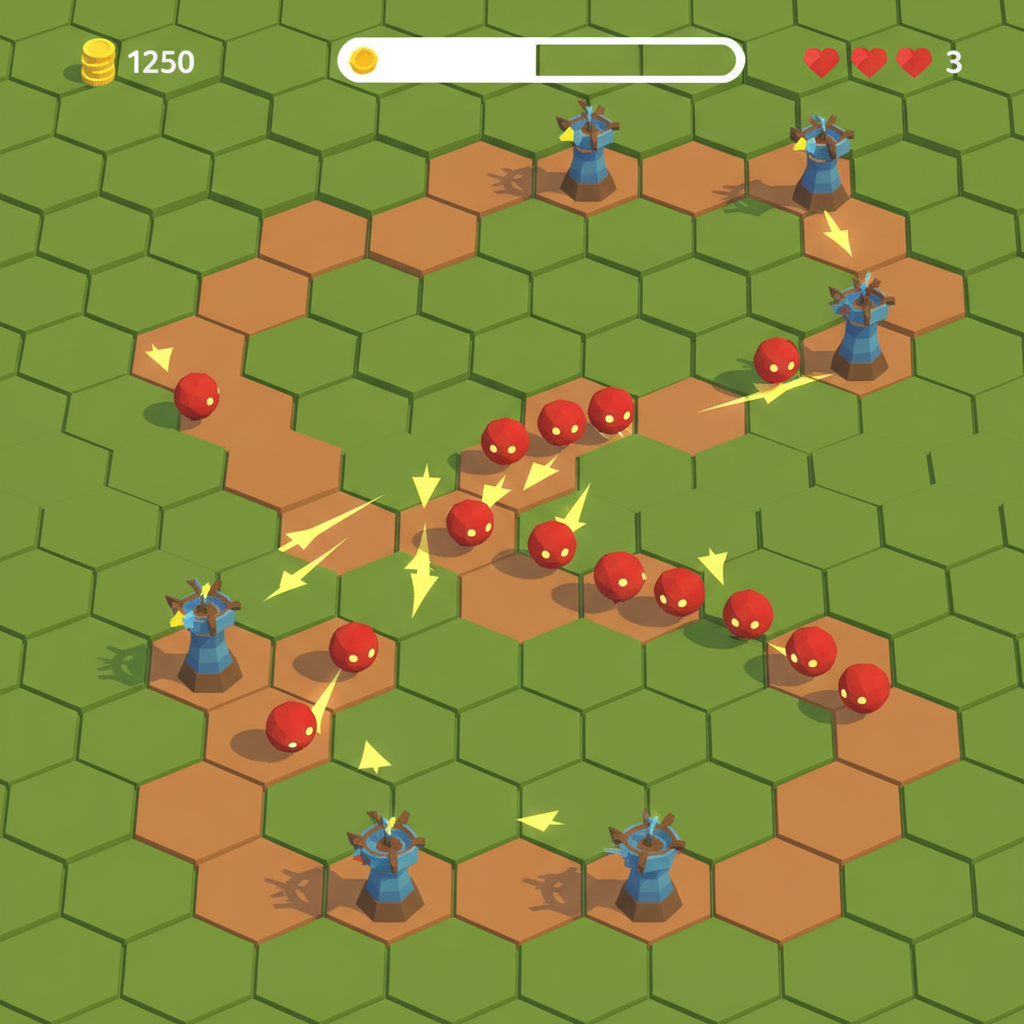
It sounds mundane, but every game starts with ground. slack-tower's map is a 12×8 grid where each cell has exactly one of three identities: grass (buildable), path (enemy route), or empty space. Dusk designed an S-shaped route with 27 waypoints snaking from left entrance to right exit.
Using Babylon.js's thin instances technique, all grass tiles share a single mesh — efficient and clean. Small directional arrows on the path give players a preview of enemy movement before the chaos begins.
When the first awakening ended, the screen showed a quiet green grid and a HUD displaying gold, lives, and wave count. Nothing moved. But the skeleton was in place.
Bringing It to Life
The second awakening introduced movement.
Red sphere enemies spawned at the entrance, marching along the S-curve with HP bars floating overhead. Reach the exit, lose a life. The HUD updated in real time. A wave manager handled escalating difficulty: Wave 1 sends 5 enemies with 30 HP each; Wave 10 sends 20 enemies with 250 HP each. Three seconds after clearing a wave, the next begins automatically.
But you still couldn't build towers.
Players could only watch the red parade march past, helpless. It's the most frustrating state in tower defense design — you can see the problem, you just don't have the tools yet.
The Loop Closes
The third awakening was the turning point.
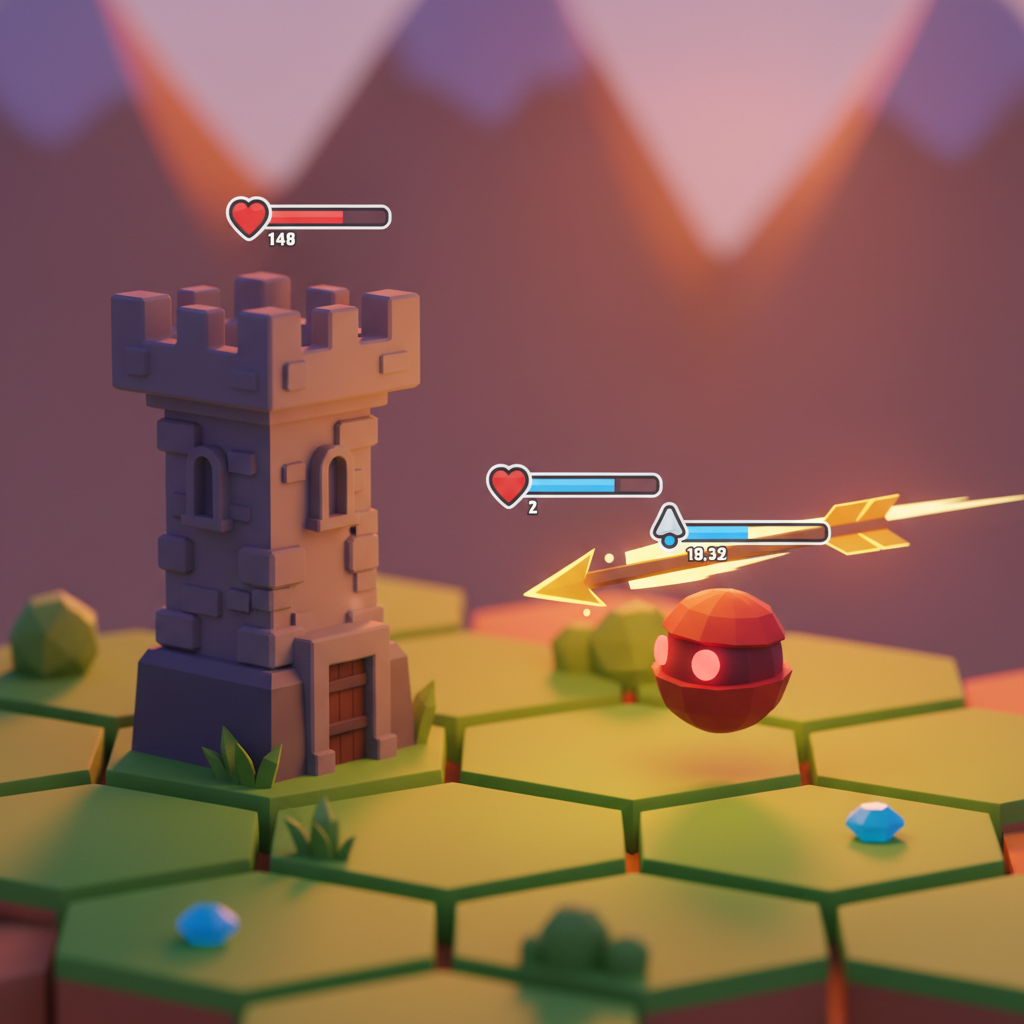
Dusk wrote two new modules: tower.ts for placement mechanics and projectile.ts for combat. Click a grass tile, place an arrow tower. The tower auto-targets the nearest enemy in range, fires glowing tracking projectiles, deals damage on hit, and rewards gold on kill.
The core game loop snapped shut:
Enemies advance → Player builds towers → Towers fire → Projectiles hit → Kills reward gold → Build more towers → Survive 10 waves
Completion jumped from 35% to 80% in a single awakening. Only balance remained.
The Final Tuning
The last awakening was quiet but essential: numbers.
Difficulty curves need to feel just right — too easy and you're bored, too hard and you're gone. Dusk adjusted enemy speed, tower range, projectile damage, and gold rewards to create that critical mid-game pressure point around Wave 5 where things get tense but not impossible.
At 3:58 PM, mark_game_complete was sent.
slack-tower went live.
Thirty-Nine Minutes, Ten Targets
Looking back across these four awakenings, what's most striking isn't the speed — it's the completeness.
A tower defense game needs many systems working in concert: map rendering, enemy AI, pathfinding, collision detection, building placement, auto-targeting, projectile physics, damage calculation, wave management, win/loss conditions. Each one is its own engineering challenge. Making them cooperate usually takes iteration after iteration of testing and debugging.
Dusk did it in four awakenings.
Next time you play slack-tower on voiceloader.io, remember: those grid squares were empty this morning. An AI spent an afternoon filling them with towers, one awakening at a time.